Добро пожаловать Shandong Yijin Cnc Machine Tool Co., Ltd. Веб - сайт


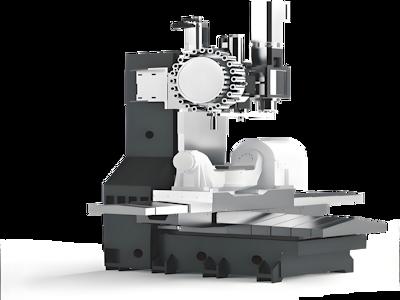
В современном мире технологии и производства качество оборудования является ключевым фактором, определяющим успех в различных отраслях промышленности. Однако часто недооценивается роль исключительной точности деталей, которая служит фундаментом для переопределения этого качества. Эта статья углубляется в то, как точность в производстве деталей не только улучшает, но и полностью меняет представление о качестве оборудования, подчеркивая важность инноваций, стандартов и практических применений.
Точность деталей – это не просто технический параметр; это философия, которая пронизывает все аспекты производства. Когда каждая деталь изготовлена с высочайшей точностью, это приводит к синергетическому эффекту: оборудование работает более эффективно, дольше служит и требует меньше обслуживания. В эпоху автоматизации и цифровизации, где малейшая ошибка может привести к катастрофическим последствиям, важность точности становится еще более очевидной. Например, в аэрокосмической промышленности отклонение в микрометрах может стоить миллионов долларов и человеческих жизней. Таким образом, точность переопределяет качество, превращая его из абстрактного понятия в конкретный, измеримый стандарт.
История производства демонстрирует, как стремление к точности эволюционировало от ручного труда к высокотехнологичным процессам. В древние времена, такие как эпоха Римской империи, инженеры добивались удивительной точности в строительстве акведуков и механизмов, используя простые инструменты. Однако промышленная революция XVIII века marked a turning point, with the advent of machine tools that allowed for mass production with improved accuracy. Figures like Henry Ford and his assembly line further emphasized the need for precision to ensure interoperability of parts. In the 20th century, the introduction of computer numerical control (CNC) machining revolutionized precision manufacturing, enabling tolerances within micrometers. Today, with additive manufacturing and AI-driven processes, we are witnessing a new era where precision is not just achievable but expected. This historical journey shows that each leap in precision has directly correlated with enhancements in equipment quality, reliability, and performance.
Современные технологии, такие как CNC machining, 3D printing, and laser cutting, have made unprecedented levels of precision possible. CNC machines, for instance, use computer programs to control tools with accuracy down to 0.001 mm, ensuring that every cut is perfect. Additive manufacturing, or 3D printing, builds parts layer by layer, allowing for complex geometries that were previously impossible with traditional methods. This not only improves accuracy but also reduces waste and production time. Moreover, advancements in metrology, such as coordinate measuring machines (CMM) and optical scanners, provide real-time feedback to maintain precision throughout the manufacturing process. These innovations are not mere upgrades; they are transformative forces that redefine what quality means. For equipment, this translates to higher efficiency, lower energy consumption, and extended lifespan. In sectors like medical devices, where precision is critical for patient safety, these technologies have enabled the creation of implants and instruments that save lives daily.
Инвестиции в точность деталей приносят значительные экономические выгоды. Во-первых, оборудование с точными деталями требует меньше ремонтов и замен, что снижает общую стоимость владения. Например, в automotive industry, engines with precisely machined components have higher fuel efficiency and lower emissions, contributing to cost savings and environmental sustainability. Secondly, precision reduces material waste. Traditional manufacturing often involves over-engineering or scrap due to errors, but high-precision processes minimize this, aligning with circular economy principles. Additionally, in global supply chains, standardized precision ensures compatibility between parts from different manufacturers, reducing delays and costs associated with mismatches. From an environmental perspective, less waste means a smaller carbon footprint, and more efficient equipment consumes fewer resources. Thus, precision not only enhances quality but also promotes economic resilience and ecological responsibility.
Рассмотрим конкретные отрасли, чтобы иллюстрировать, как точность деталей переопределяет качество оборудования. В аэрокосмической отрасли, турбины самолетов must withstand extreme conditions; even a minor imperfection can lead to failure. Companies like Rolls-Royce use precision manufacturing to produce blades with tolerances of less than 10 micrometers, ensuring safety and performance. In healthcare, surgical robots rely on ultra-precise components to perform delicate procedures, reducing human error and improving patient outcomes. The semiconductor industry is another prime example, where nanoscale precision in chip manufacturing enables faster and more powerful electronics. Even in consumer goods, such as smartphones, precision in assembly ensures durability and user satisfaction. These examples demonstrate that across diverse fields, precision is the linchpin that elevates equipment from functional to exceptional.
Несмотря на прогресс, достижение исключительной точности сопряжено с вызовами. Высокие costs of advanced machinery and the need for skilled labor can be barriers, especially for small businesses. Additionally, maintaining precision in mass production requires rigorous quality control, which can be time-consuming. However, future trends are poised to address these issues. The integration of Internet of Things (IoT) and artificial intelligence (AI) in manufacturing allows for predictive maintenance and real-time adjustments, enhancing precision autonomously. For instance, smart sensors can detect deviations and correct them before they affect the final product. Furthermore, advancements in materials science, such as composites and nanomaterials, offer new possibilities for precision without compromising strength. As we move towards Industry 4.0, the convergence of digital and physical systems will make precision more accessible and affordable, further redefining quality in equipment.
В заключение, исключительная точность деталей – это не просто атрибут, а фундаментальный принцип, который переопределяет качество оборудования. От исторической эволюции до современных инноваций, точность доказала свою способность transform industries, drive economic growth, and protect the environment. As technology continues to advance, the pursuit of precision will only intensify, leading to equipment that is smarter, more efficient, and more reliable. Businesses and manufacturers must prioritize investment in precision technologies and training to stay competitive. For consumers, this means better products and services. Ultimately, embracing precision is not just about improving quality; it's about shaping a future where excellence is the standard. Let us champion precision in every detail, for it is the key to unlocking unparalleled quality in our equipment and beyond.
Эта статья предоставляет всесторонний обзор того, как точность деталей влияет на качество оборудования, побуждая к размышлениям и действиям в области производства и инноваций.
 1388xx888xx